


Budgets are getting more stretched, expectations keep rising, and AI is adding a whole new layer of pressure.
As proud sponsors of EVOLVE, Brighton’s annual technology and innovation conference powered by Silicon Brighton, we wanted to keep the conversations going beyond the event itself.
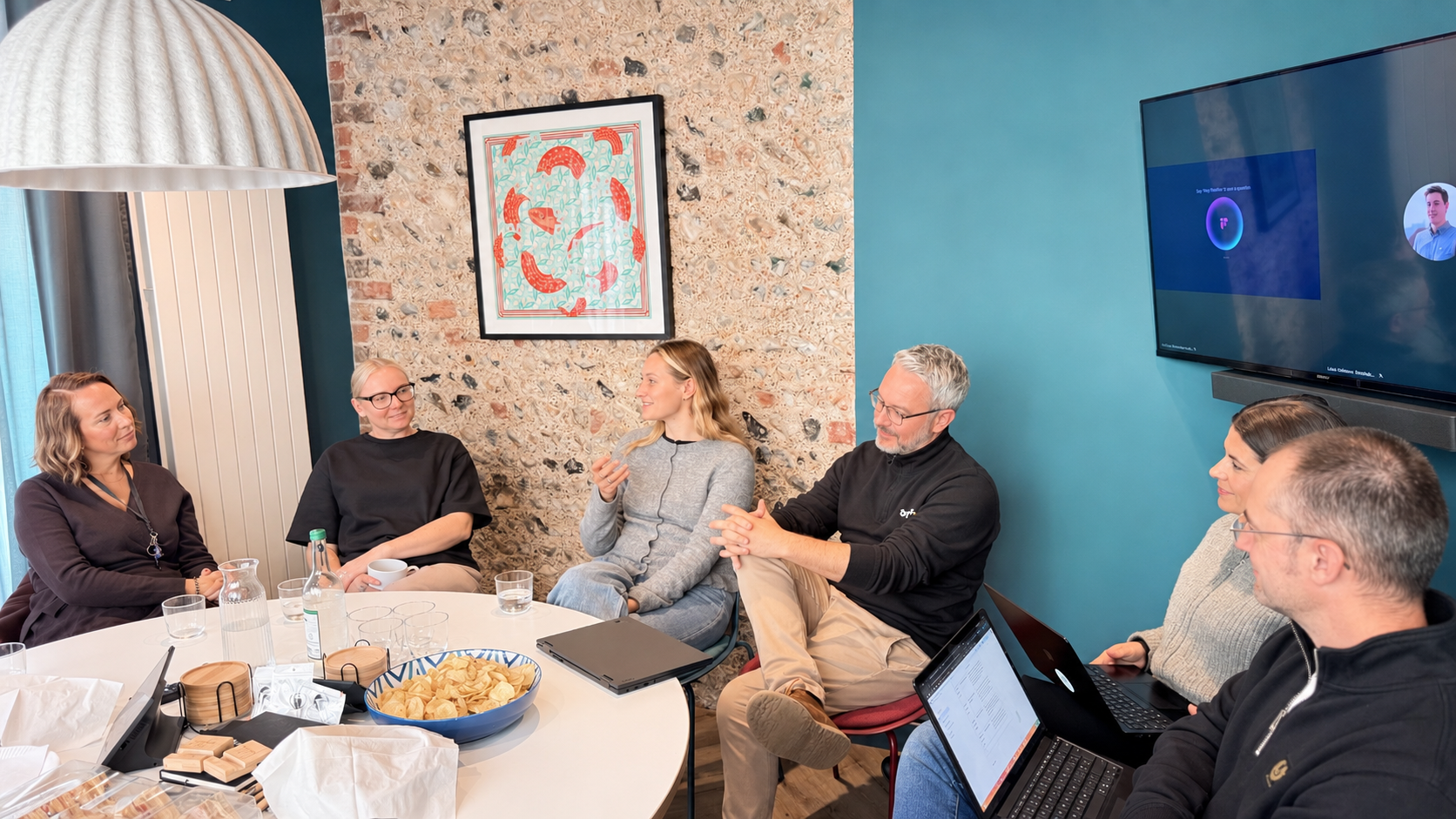
So, at the end of October, we brought together marketing leaders and industry specialists for our first EVOLVE X Bamboo Nine Marketing Roundtable, an open discussion about the challenges businesses are facing and how they’re approaching them.
From rising acquisition costs to the realities of implementing AI, the conversation explored some familiar frustrations and raised a few interesting questions about where marketing investment should go next.
Here are five takeaways worth thinking about.
Register your interest for the next roundtable.
1. Short-term pressure is getting in the way of long-term growth.
When budgets are tight, it’s understandable that businesses want to see immediate results from their marketing spend.
But several participants described how pressure for quick wins can make it difficult to commit to the longer-term activity that builds a recognisable brand and supports sustainable growth.
One participant suggested keeping a consistent strategic direction for around 18 months, giving businesses time to see whether their approach is working.
Because changing your entire marketing strategy every time someone has a new idea in a Monday meeting can get expensive.
For marketing managers juggling competing priorities, the discussion reinforced the value of having a clear strategy that can guide day-to-day decisions. Campaigns can evolve as performance data comes in, while the wider business objectives remain consistent.
2. AI is saving time. But what are businesses doing with it?
AI dominated much of the conversation, with participants sharing practical examples of how they’re using it to improve efficiency.
One business had developed an AI-assisted presentation workflow so sales teams could produce their own materials using approved brand guidelines. This reduced the demands on its creative team, although increased tool usage introduced additional costs.
Which raises an interesting question: if AI saves your team ten hours a week, what happens to those ten hours?
For a business investing in AI tools, the commercial value depends on what that additional capacity achieves. Can your team spend more time on work that generates revenue? Can you support business growth without increasing headcount at the same rate?
The group also questioned whether measuring how many employees use AI tells businesses very much about the return on their investment.
A company-wide AI subscription might look impressive on an internal update. The finance team will probably want a little more detail.
3. Your brand needs to exist beyond your own website.
One of the most interesting conversations explored how AI search is changing the way people discover businesses.
A question raised during the session captured the issue: “If your website disappeared tomorrow, would AI still know who you were and what you’re about and what your brand stands for?”
It’s a useful question for any business investing heavily in its website while overlooking its wider online reputation.
As potential customers increasingly use AI tools to research suppliers and compare businesses, the information available about your brand across the web becomes particularly valuable.
Participants discussed the growing importance of Digital PR and credible third-party coverage in building that wider presence. Independent mentions can help establish what a business is known for and provide sources that AI search systems may reference.
For marketing leaders, this has implications for how PR activity is valued. A relevant industry feature could contribute to your brand’s discoverability long after its initial publication, even when direct referral traffic is modest.
And with AI making it remarkably easy to produce mountains of unremarkable content, having a distinctive point of view is becoming a valuable advantage.
4. If AI does all the junior work, where will the next generation of experts come from?
The group explored how AI is changing creative development, including its ability to generate concepts and accelerate research.
One example involved synthetic consumer research, which a participant described using to shorten the time needed to test ideas. But the discussion also raised questions about how accurately AI-generated insights reflect changing customer behaviour.
You can generate a hundred campaign concepts in an afternoon. Your customers still have to care about one of them.
For businesses already struggling to stand out in competitive markets, understanding what motivates their audience remains essential.
There was also concern about the long-term impact on junior marketers. If AI takes over the tasks through which people traditionally develop their skills, how will the next generation learn to recognise poor work or challenge questionable recommendations?
The discussion highlighted the need to invest in developing people’s judgement alongside the technology they’re using. Experienced marketers still have an important role in deciding which ideas deserve the budget.
5. The return on face-to-face events deserves a longer view.
Despite all the discussion around AI and tools that help you stay visible in AI search, there was plenty of enthusiasm for something considerably less technical: getting people together in a room.
Participants shared experiences of using events to strengthen existing customer relationships and develop opportunities in new markets.
For businesses selling high-value services or working with longer sales cycles, the return can be difficult to capture through immediate lead-generation figures.
One participant pointed out that a contact made at an event might take three years to become a commercial opportunity.
Not particularly helpful if you’re expected to demonstrate the event’s entire ROI by Monday.
The conversation also explored how company culture influences the experience people have when meeting a business’s employees.
A team that understands and believes in the business they’re representing can make a stronger impression than a carefully rehearsed networking pitch.
For marketers planning their events budget, it was a useful reminder to consider the role each event plays in building future business, alongside any immediate pipeline generated.
Continuing the conversation.
Our Evolve X Bamboo Nine Marketing Roundtable brought together people facing similar commercial pressures, often with very different experiences of tackling them.
What was particularly enlightening was when participants challenged each other’s assumptions, or shared what had actually happened when they tried something in their own businesses.
There were plenty of questions left open, particularly around how AI will affect marketing teams over the next few years.
And those are exactly the conversations we want to keep having, in a room, with people.