


the 7 key insights your business needs to know.
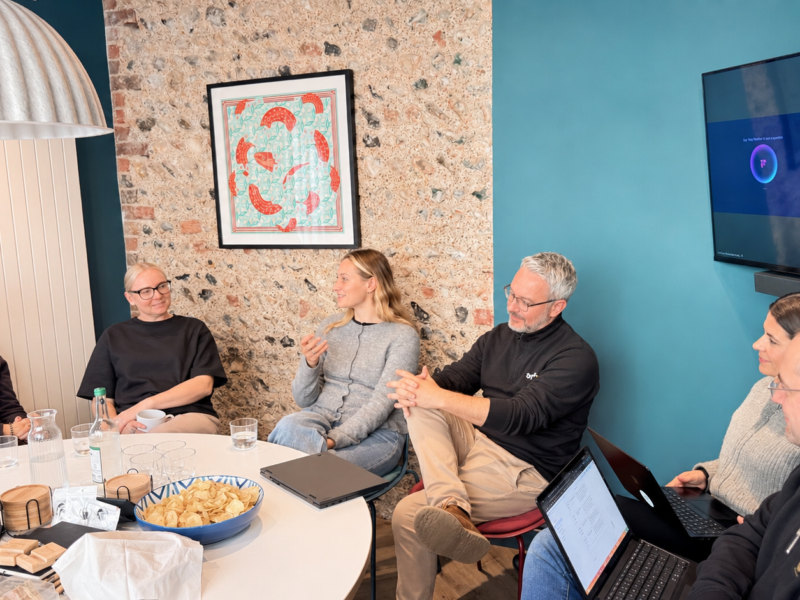
Another day, another industry conference to which we deployed our intrepid marketing troops. This time it was UX Brighton, where our Senior Graphic Designer, Sam Waters, and Art Director, Holly Thoms, soaked up all the insights they could.
Here are their main takeaways and what they actually mean in practical terms for your website and your business.
01. A successful website launch doesn’t mean you’ve built a successful website.
“Something can be finished on time and approved while the original user problem still exists.” — Holly
A website launched on time and within budget sounds like a success. But has it actually achieved what the business needed?
This was a key takeaway from Kathy Neuss’ Bridging the integrity gap talk, which challenged how teams measure success.
For example, if you redesigned your website to generate more enquiries, the real measure of success is whether it continually attracts more qualified leads.
For your business:
Before investing in a redesign, establish what needs to improve and how you’ll measure it. That might be reducing checkout abandonment or improving conversion rates. Agree on these measures before work begins, then review performance after launch.
Our conversion rate optimisation services focus on identifying what’s preventing visitors from converting and making measurable improvements.
02. Your competitors’ mistakes could be your biggest opportunities.
“Look at what they do badly (and do the opposite).” — Sam
Most competitor research focuses on what other businesses are doing well. Sam’s takeaway was to investigate where they’re frustrating customers.
Holly’s notes from Vivek Gopinath’s UX research’s inheritance problem reinforced the importance of choosing research methods that reveal the problem you’re trying to understand.
For your business:
Ask customers about poor experiences they’ve had with competitors. Was the purchasing process confusing? Were delivery details difficult to find? What would have made the experience better?
A builders’ merchant, for example, might discover that customers struggle to access technical specifications on competing websites. Making that information easier to find could give customers a compelling reason to choose them.
For further reading, Vivek shared his UX Methods Atlas, a resource for exploring different approaches to user research.
Our competitor analysis services help businesses identify these kinds of gaps and opportunities within their markets.
03. Your customer experience is a long-term consideration.
“The user experience should continue after someone presses ‘Submit’.” — Holly
A brilliant website experience can be undone by a poorly handled enquiry.
Pat Jordan’s Beyond the Interface: Why Behaviour Is Your Biggest UX Problem explored how customer experience extends beyond digital interactions into the behaviour of the people delivering a service.
Think about a potential customer submitting an enquiry. How quickly do they receive a meaningful response? Are they given clear next steps?
For service businesses with longer sales cycles, these interactions can significantly influence whether an enquiry becomes a client.
For your business:
Test your customer journey beyond the website. Submit an enquiry yourself, review the follow-up process and identify where customers experience unnecessary delays or confusion.
Track response times alongside lead-to-sale conversion rates to understand where improvements could make a commercial difference.
04. Memorable design should give customers something useful.
“People remember people & experiences.” — Sam
One idea Sam brought back was creating ‘good drama’: small, unexpected moments that make an experience memorable.
For websites, that could mean a distinctive interaction or an inventive way of presenting information. The opportunity is to make something genuinely useful feel memorable.
For your business:
Consider where thoughtful design could help customers better understand your offering.
A luxury jewellery retailer might use interactive imagery to demonstrate craftsmanship, while a specialist manufacturer could introduce a product selector to help customers find the right specifications.
These features can communicate expertise and make purchasing decisions easier. Their effectiveness should be tested against how customers actually use them.
Our UX/UI design services focus on creating website experiences that balance usability with strong visual design.
05. Designing directly in code could save time and reduce rework.
“We’re creating the experience in Figma, then recreating it in code.” — Holly
Phil Morton’s Escape From Figma Island: why and how to start designing in code again was Holly’s standout talk.
Traditionally, designers create detailed website layouts in Figma, which developers then translate into working pages. This can mean considerable effort spent recreating designs and refining interactions that couldn’t be fully tested beforehand.
AI-assisted coding is making it easier for designers to build functional prototypes earlier, potentially reducing duplication and allowing more testing within the actual website.
For your business:
When commissioning a website, ask how designers and developers collaborate, and how early you can test working prototypes.
For complex features such as booking systems or product configurators, testing real interactions early can identify usability problems before they become expensive to fix.
Our web design and web development teams work together to connect design decisions with practical functionality.
06. AI needs experienced people making the decisions.
“Think of it as an assistant which you coach, never the leader.” — Sam
Unsurprisingly, AI featured heavily at UX Brighton.
Sam’s main takeaway was that AI can help designers explore unfamiliar techniques and experiment outside their usual skill sets, provided they understand and evaluate the outputs.
One speaker even received cheers for revealing he’d drawn all his presentation slides by hand. Make of that what you will.
For your business:
AI can help generate initial design concepts or explore alternative layouts, but experienced designers still need to assess whether those outputs meet customers’ needs.
This is particularly important for businesses where credibility and specialist expertise influence purchasing decisions. Generic visuals or inaccurate information can quickly weaken customer confidence.
The useful measure is how AI improves the final work, including the time and expertise required to review it.
07. Build repeatable AI processes around work you already understand.
“A reliable process with clear inputs and checks.” — Holly
Both Sam and Holly identified opportunities to make AI more useful through structured workflows.
Sam highlighted splitting projects between different AI agents, with separate responsibilities for tasks such as research and review. Holly focused on turning recurring work into consistent processes with defined quality checks.
At Bamboo Nine, we’ve already started experimenting with this through tools such as our B9 Website QA skill, which helps standardise checks against approved website content.
For your business:
Identify one repetitive task your team understands well, such as reviewing content before publication or preparing regular performance reports.
Document the steps involved, identify where AI could reduce manual work and introduce checks to catch errors. Then compare the time saved against the quality of the result.
AI tools will continue to change. A process you can evaluate and refine is a more useful investment than adopting new technology simply because it’s available.
what we’re taking back to Bamboo Nine.
UX Brighton gave our Creative team plenty to explore, particularly around practical AI applications and bringing design closer to development.
For businesses considering their next website investment, the most useful starting point is understanding where the current experience is affecting performance.
Our Discovery Consultation helps identify those opportunities, establish priorities and determine where your investment is likely to have the greatest impact.