

What marketers & brands actually need to know.
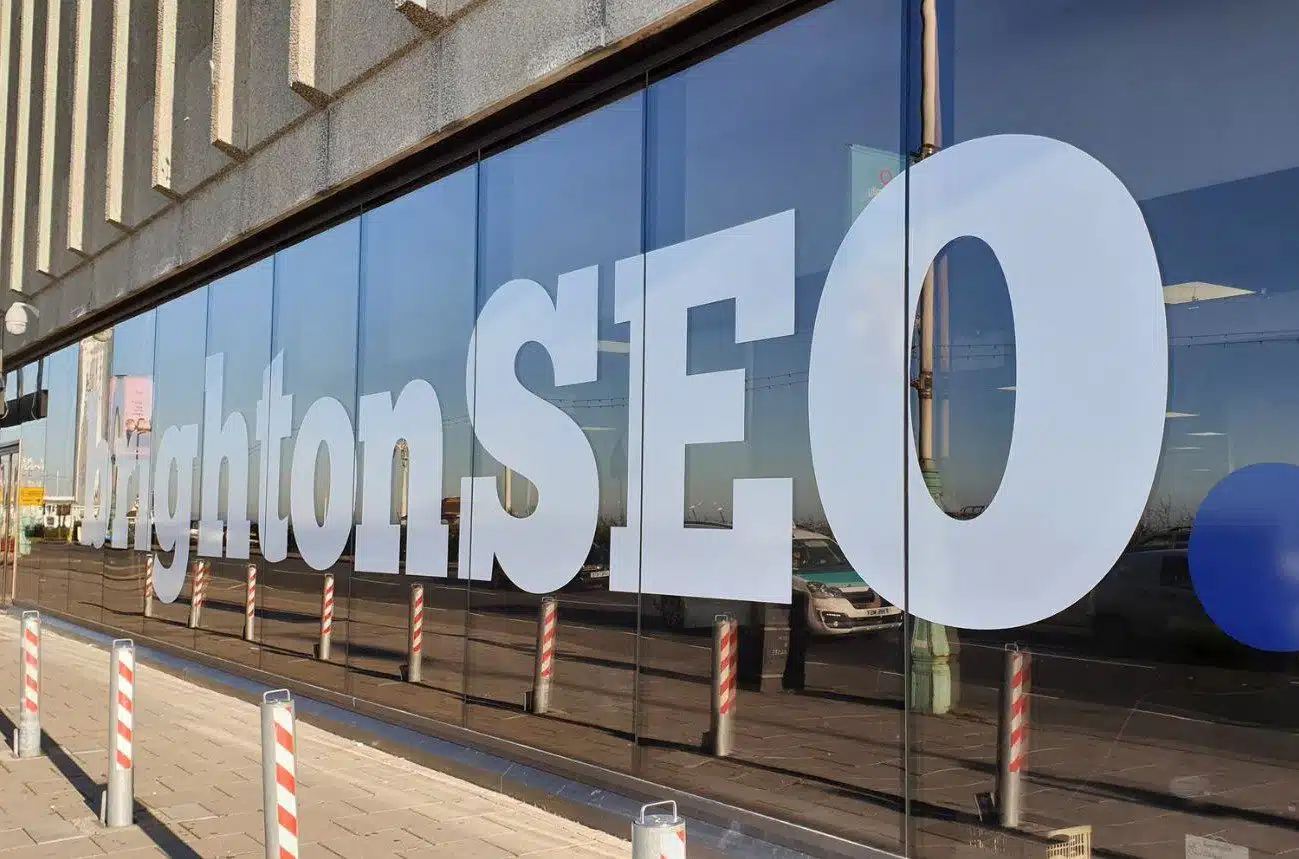
The doors have shut on the hulking Burtalist beast of the Brighton Centre, and brightonSEO has wrapped for spring, leaving behind the usual cocktail of useful insight, recycled talking points, and AI-powered platitudes.
As ever, the best talks were the ones with a clear point of view and original data, while the weakest rehashed “[insert SEO discipline] is dead” pronouncements and assured us that AI has changed search, then offering advice that would not trouble an SEO checklist of half a decade ago.
There is still a lot of clamour around AI search, and not nearly enough useful data, which probably explains the sameness of some of the conversations.
That said, our Paid and Organic teams did find plenty worth taking back. The stronger insights looked beyond platform updates and algorithm anxiety, and focused on how people actually search, decide, trust and convert – and how to market to them more effectively.
Here are our top insights from the Spring 2026 edition of brightonSEO.
TL;DR: Top 10 brightonSEO learnings.
- Zero-click search changes the job of content, not just the reporting.
If fewer users click, the ones who do need stronger journeys: internal links, proof, service-page routes and DCP pathways. Dead-end blogs are harder to justify. - Prompt tracking is too flimsy to measure AI visibility properly.
Repeating one prompt does not reflect how people use AI. We should be measuring topic coverage, buyer intent and multi-turn journeys instead. - GEO belongs inside organic strategy.
AI visibility depends on the same ecosystem as SEO: structured data, content quality, PR, reviews, community mentions and trusted third-party sources. - AI-powered audience research should be treated with suspicion.
AI can produce believable personas, but believable is not the same as useful. Reddit, reviews, Trustpilot and sales conversations give better raw material. - Generic AI content is strategically pointless.
If the article already exists in 100 versions, AI will summarise someone else before sending users to you. Named expertise and original data matter more. - Off-site authority is becoming a direct visibility lever.
Digital PR, journalism, Reddit, YouTube and third-party reviews now influence how both users and AI systems decide who is credible. - ROAS is not a growth metric.
It can indicate efficiency, but it does not prove profitability. Paid strategy needs to account for margins, lifetime value, customer quality and the role of each product. - Microsoft Ads deserves a tailored strategy, not Google leftovers.
Bing’s audience skews more senior, desktop-heavy and B2B. For high-value services, that makes it a different opportunity rather than a smaller one. - Meta performance is shifting back towards proper funnel thinking.
Conversion campaigns alone are easier to report on, but not enough to scale. Creative variation, awareness, nurturing and lead quality need more attention. - The real advantage is joined-up marketing infrastructure.
Structured data, attribution, review systems, PR, content journeys and AI-assisted workflows are not glamorous, but they are what will separate serious brands from reactive ones.
Our channel experts give their best brightonSEO insights.
Key SEO takeaways from brightonSEO:
Let’s start with the conference’s namesake, SEO! Everyone was talking about this era of zero-click SEO. How do we show the value of what we do when the metrics we traditionally used are becoming less and less reliable?
Well, the stronger talks pointed to the increasing importance of understanding behaviour, structuring information properly, building trust off-site, and to stop pretending GEO is a totally separate discipline.
- Keywords are losing influence as search shifts towards intent and semantic relevance, so campaigns need broader topic coverage, stronger context and clearer answers to real user problems.
- GEO and SEO are increasingly drawing from the same signals, which means AI visibility should sit inside organic strategy, not in a separate box.
- AI search is collapsing parts of the funnel, so content needs to support discovery, comparison and decision-making in fewer steps.
- Off-site visibility now affects search performance, making PR, communities, reviews and third-party mentions part of the SEO picture.
- Structured data is still underused, creating a practical advantage for brands that help AI systems understand them properly.
- Generic AI content is becoming noise, so original expertise, clear opinions and genuinely useful information matter more.
- User behaviour is shifting towards speed and cognitive ease, which means content needs to help people make decisions, not drown them in options.
- Local trust signals still carry weight, especially reviews, public responses and third-party reputation platforms.
- AI visibility measurement needs to move beyond repeated prompt tracking and towards topic coverage, buyer intent and multi-turn journeys.
- Agentic workflows are already usable, so the question is now whether teams are actually building with them.
What our SEO experts say:
“Search is becoming more behavioural, semantic and trust-led. Less chasing rankings in isolation, more building systems, authority and visibility that AI platforms can understand and surface.”
– Dave Colgate, Head of Organic
“AI search is forcing a shift away from rigid keyword and prompt tracking towards something far more behavioural and semantic. The traditional search journey is collapsing, with more of the decision-making process happening directly inside AI platforms. The brands that adapt fastest will be the ones building around real buyer context, intent and trust signals, not just isolated prompts or rankings.”
– Sophie Tanner, SEO Manager
Key content takeaways from brightonSEO:
The content talks were noticeably less convinced by AI than some of the SEO sessions, and for good reason. Writing is really not where AI shines. The super insightful talks came back to what trained copywriters know works: knowing who you are talking to, using real community insight (hello, Reddit!), building trust, and making the next step obvious.
- Traffic and rankings of our content matter less in isolation because users now encounter AI answers, Reddit threads, videos and SERP features before reaching a website. This means visibility alone is less valuable if content does not move users towards action once they arrive.
- Organic content now needs to support the full journey. Stronger internal linking, clearer CTAs, better proof and connected content journeys matter more as search journeys fragment.
- Using real audience language from Reddit, reviews and communities is invaluable, because it reveals genuine objections, trust gaps and buying triggers.
- AI visibility does not automatically create authority — users still look for human trust signals like SMEs, community presence, reviews and video content, especially for higher-consideration decisions.
- Originality, named expertise and genuinely useful perspectives are becoming stronger differentiators as content quality flattens across the web.
- User experience of content is increasingly part of brand trust. Clear information, fast load times and usable journeys influence whether a business feels credible and easy to work with, not just our words!
- Different platforms serve different behaviours, so content strategy should start with user intent and context rather than blindly reposting the same formats everywhere.
What our content experts say:
“Do not be fooled by anyone selling you ‘AI-powered audience research’. AI will tell you what sounds believable because it is predictive text, and the text it predicts is statistically likely. But the humans you’re trying to connect with through your marketing won’t resonate with generic AI drivel. Get your tone of voice in order with a human-powered brain, go to the places your audience hangs out, and use these insights to build content that people actually want to read.”
– Chloe Porter, Content Manager
“Generic click targeting content is probably done. It already exists in 100+ places, and AI has munched it all up and will spit it out above your article. Basically, the focus needs to be on quality and originality, and building an audience around that.”
– Oliver Logue, Content Manager“Content should be designed for behaviour before platform. Everything comes back to knowing the audience you’re writing for, and their needs should always be at the centre.”
– Elena Browning , Senior Content Specialist
“I think AI is viewed as this highspeed train, like if you don’t catch it, you’ll be left behind. I think this is rubbish. We control algorithms and SERPs in the long run, with either what we produce or what we choose to consume.”
– Piper Berney, Content Specialist
Key Digital PR takeaways from brightonSEO:
Digital PR came through as a core part of organic strategy. AI search relies heavily on journalism, third-party coverage and earned authority, so PR now plays a bigger role in both SERP visibility and how brands are represented in AI answers.
- Geospatial behaviour insights (data showing how people move through physical spaces and locations in the real world) show how people actually move through the world.
- These insights use real-world signals like location data, footfall, dwell time, visit frequency and journeys between locations. The PR value comes from turning that behaviour into clear, newsworthy angles.
Strong stories pinpoint where behaviour happens, when it happens and where the gaps are. - Contradictions between what people say and what they actually do can create especially strong angles. Mapping real-world journeys opens up richer, more human storytelling. Maps add strong visual potential and make the insight feel tangible.
- This kind of data turns everyday movement into something ownable and genuinely newsworthy.
- Digital PR is increasingly important in organic strategy since LLMs tend to prioritise citing journalism in the SERPs.
What our PR expert says:
“What stood out most was how powerful geospatial data becomes for PR when you translate it into clear angles. It’s not just about trends, but about pinpointing where behaviour happens, when it happens, and where there are gaps or contradictions, especially between what people say and what they actually do.”
– Emma Knott, Head of Digital PR
Key organic social media takeaways from brightonSEO:
Organic social came through as part psychology, part distribution. If user journeys are fragmented and attention is scarce, social needs to make the brand easier to recognise and trust across repeated touchpoints.
- Customer journeys are no longer linear, so organic social needs to keep the brand visible across multiple decision points.
- Consistent branding and messaging builds familiarity, recall and trust as audiences move between channels.
- Attention is scarce, so content needs to help people understand and decide quickly.
- Human psychology matters more as third-party tracking declines, because behaviour, emotion and motivation become harder-working signals.
- Emotional engagement helps people notice, remember and rationalise decisions later.
- Reducing cognitive load improves engagement, because too much choice, clutter or interruption makes people drop off.
- Social proof works best inside the journey, where reviews and proof content can answer specific doubts at the right moment.
- Platform-specific behaviour matters; blanket distribution is less effective than tailoring content to how people actually use each channel.
- Pinterest should be treated more like a visual search engine than a traditional social platform.
- Reddit and other discovery-led platforms need the same kind of reframing, based on user intent rather than generic posting.
- Data should be read as behavioural insight, not just performance reporting.
What our organic social expert thinks:
“It’s always good to see the link between customer journey’s and how that can relate to social, but also wider services as well – to know the psychology is to better trap and guide our audiences to where we want them to go and keep our brands top of mind. That means standing out in a digital scape where attention is scarce, whilst also allowing for quick user decisions.”
– Montana Cato-Pellew, Social Media Content Specialist
Key PPC takeaways from brightonSEO:
The paid media talks were all about getting closer to actual commercial value. Better measurement, better segmentation, better understanding of intent — and less obsession with surface-level metrics that make reports look nice but say very little about growth.
- AI in paid media is moving from experimentation to operational use, with workflows and agents increasingly built into day-to-day execution.
- ROAS is still useful, but it is not the same thing as profitability, which means campaigns need to account for margins, lifetime value and customer quality.
- Paid performance cannot be measured in isolation from landing pages, UX and the wider customer journey.
- Different products serve different commercial purposes, so bidding and reporting should reflect whether the goal is scale, profit, liquidation or long-term acquisition.
- “Gateway” products may underperform on front-end metrics while still driving long-term customer value.
- Paid should be treated as pipeline influence rather than lead volume, especially for B2B and longer buying cycles.
- Different stakeholders need different messaging, because buying decisions are rarely made by one person alone.
- Microsoft Ads is still underestimated because it is treated as a smaller Google rather than a different ecosystem entirely.
- Bing’s audience skews more senior, more B2B and more desktop-heavy, making it particularly relevant for high-value services.
- Microsoft’s audience data from LinkedIn, Outlook and Teams creates stronger intent and professional targeting signals.
- AI-driven search experiences like Copilot are shortening the funnel, increasing the importance of context, timing and visibility over exact keyword matching.
What our PPC experts say:
“ROAS is lying. We all know it’s not a true indicator of growth or profitability, so PPC should be looking to optimise profit per customer, not just return in-platform.”
– Joe Stansfield, Senior Paid Media Analyst
“Microsoft Ads is often treated as a copy-paste of Google, but that approach doesn’t really work. It naturally gets less attention, but that doesn’t mean it holds less value — it’s just a different type of opportunity.”
– Yoanna Koleva, Senior Paid Media Analyst
Key paid social media takeaways from brightonSEO:
In the paid social media world, talks about Meta focused on fundamentals: understanding people properly, building stronger creative, and treating paid social as a full-funnel channel rather than a machine that spits out cheap conversions forever.
- Meta is rewarding stronger creative variation rather than endless versions of the same ad, which means creative strategy now matters more than brute-force testing volume.
- Understanding customer problems and motivations is becoming more important than hyper-specific targeting, as Meta’s automation handles more of the audience matching itself.
- Hooks, messaging and psychology matter because users make decisions incredibly quickly in-feed.
- Simpler offers and clearer messaging improve conversion by reducing overwhelm and hesitation.
- Reviews, UGC and visible expertise are increasingly important trust signals within ads themselves.
- Lead quality matters more than lead volume, especially as platforms make it easier to generate cheap but low-intent leads.
- Messenger and lead forms can work well, but speed of follow-up and qualification logic heavily affect conversion quality.
- “Maximise conversion value” is becoming more useful than simply maximising conversion numbers where customer quality matters.
- Brands are over-relying on bottom-funnel conversion campaigns because they are easier to report on.
- Stronger performance increasingly comes from full-funnel structures that build awareness, trust and familiarity before conversion.
- Awareness and nurturing campaigns are helping brands scale more sustainably than conversion-only approaches.
- Broad targeting still matters because Meta’s systems need enough data to identify and scale the right audiences properly.
What our paid social media expert says:
“Overall, I agree on the recommendations around creative, targeting tests and thinking more on the upper-funnel strategy for Meta Ads. Meta performance now relies much more on understanding people properly, building stronger creative variation, and using a full funnel strategy rather than relying heavily on conversion campaigns alone.”
– Aisling Horrigan, Paid Social Manager
Key data & engineering takeaways from brightonSEO:
And finally, a small but mighty takeaway from data: it looks like multi-channel attribution models are going to be the way forward when it comes to getting a fuller picture of what’s pushing user behaviour.
What our data experts says:
“When users have so many touchpoints in a conversion journey, and most ad platforms are claiming credit for conversions because they can’t see the broader picture, it’s useful to give a clearer insight into how all of the platforms a client uses play a role in pushing user conversions. (That and overuse of AI-generated images can delegitimise and disengage people from what could otherwise be a perfectly sound presentation… but that’s probably not my most unbiased takeaway from last week!)”
– Rhian Barber, Data Analytics Implementation Specialist
Final thoughts.
So. AI can summarise, automate and accelerate. Lovely.
But it still needs something worth pulling from. Brands with thin content, vague positioning, weak proof and disconnected channels are not suddenly going to be saved by an LLM.
The value of expert judgement and thoughtful, strategy-first marketing is only becoming more and more clear. Really understanding your audience and their communities, building trust with them off-site, measuring what actually affects revenue, and making every channel pull in the same direction is crucial.
A tragedy for the conference merch table of the innumerable “AI-powered” startups, perhaps, but good news for brands that want marketing with a spine.
Get in touch with our experts if you want to know more or have a look at our Discovery Consultation Process to see how we action strategy-first marketing.