



How to make your branding work harder.
Most businesses can tell when their branding looks dated.
A logo feels tired, or website no longer reflects the business. Maybe your marketing materials have accumulated over time without much consistency.
Those issues are usually easy to spot.
But there’s a harder problem that appears elsewhere, that many brands can miss at first.
Strong branding that considers the commercial.
It not only gives customers a reason to remember you, but it also helps marketing channels work together more effectively. In turn, this creates a foundation that supports growth long after a rebrand has launched.
Most branding problems start before design.
When people think about branding, they often think about logos first.
A new logo can certainly help signal change. So can a new website, colour palette, or visual identity. Yet visual assets rarely solve the underlying problem on their own.
We’ve worked with businesses on branding services at our agency that have invested heavily in creative work while still struggling to stand apart from competitors. The challenge wasn’t the quality of the design, but from a lack of clarity around who they were trying to reach and what they wanted to be known for.
Without this strong commercial foundation, branding decisions become difficult to make. Marketing teams create content, campaigns, and websites without a clear point of reference.
Strong brands tend to start elsewhere. They begin with understanding the audience, the market, the competitive landscape, and the commercial goals behind the business. Once those pieces are understood, visual identity becomes far more effective because it has a clear job to do.
Design helps people recognise a brand. Strategy helps them remember why it matters.
Why brand strategy comes before creative execution.
Before any creative work begins, businesses need to understand how they are perceived today, who they are competing against, and what their audience actually values when making a decision. Assumptions can be surprisingly expensive when they find their way into a brand strategy.
We’ve seen businesses position themselves around qualities they believe make them different, only to discover those same claims appear across every competitor’s website. Others build messaging around internal priorities that customers care very little about.
This is why strategy has to come first.
Research helps uncover the gaps between how a business sees itself and how the market sees it. It reveals opportunities to differentiate, highlights audience expectations, and creates a clearer direction for every decision that follows.
Once that work is done, the creative process becomes far more focused. Designers have a clearer brief and copywriters have a stronger message to communicate. Marketing teams have a framework they can apply consistently across every channel.
Strong brands create consistency across every channel.
Most customers experience your brand through many touchpoints.
They might discover you through Google, visit your website, read a blog article, browse your social channels, and compare you against competitors before making a decision.
Each interaction helps shape their perception of your business.
So, when branding lacks direction, those touchpoints often tell slightly different stories. The website focuses on one message while organic social content takes a different angle. Perhaps paid campaigns have prioritised something else entirely.
Individually, none of these decisions seem particularly significant, but collectively, they compound confusion and waste spend.
Strong brand strategy gives every channel a common direction.
In our experience, we’ve found that consistency often becomes a competitive advantage in its own right. Businesses don’t need to be the loudest in the market when customers can quickly understand who they are, what they offer, and why they’re different.
The result is a brand that feels more familiar and easier to trust. Over time, that clarity strengthens every marketing activity built on top of it.
Branding influences who chooses you.
It’s common for businesses to measure marketing performance through metrics such as traffic, enquiries, leads, and revenue.
Branding influences all of them, often in ways that are difficult to isolate but impossible to ignore.
Strong positioning helps businesses attract the right audiences from the outset. A distinctive visual identity improves recognition in crowded markets. A carefully developed tone of voice can help build trust long before a conversation takes place.
This becomes particularly important in sectors where decisions carry greater financial, professional, or personal risk. Whether someone is choosing a healthcare provider, selecting a B2B partner, or investing in a premium product, they are looking for signals that reinforce confidence in their decision.
Those signals rarely come from a logo alone.
They emerge from the way a business presents itself across every touchpoint, the quality of its messaging, and the strength of the story it tells about who it serves and why it exists.
Branding doesn’t end when the project does.
Brands earn recognition through repeated exposure over time. The positioning needs to hold up across campaigns. The tone of voice needs to work just as well in a sales presentation as it does on social media. The visual identity needs to remain recognisable whether it appears in an advert, an email, or a new product launch.
This is why branding works best when strategy, design, and content are considered together rather than as separate disciplines.
A strong brand should be able to adapt to new channels, support future growth, and provide a framework for the next stage of the business. Whether a company is entering a new market, launching a new service, or refining its digital presence, the brand should help guide those decisions rather than needing to be reinvented each time.
The businesses that get the most value from branding tend to treat it as an asset that evolves alongside the organisation itself.
That approach requires research, clear thinking, and a willingness to look beyond the visual layer. The reward is a brand that continues to support growth long after the initial launch, giving every new initiative a stronger place to start.
Do you need a branding workshop?

Brand strategy works best when it happens before the visuals. The logo, colours and typography need direction behind them, otherwise they can end up looking polished without saying much. A good strategy gives the brand a clear position, personality and set of choices to build from.
That is where a structured branding workshop can be useful. It helps turn instinct into something concrete, giving founders and teams a shared way to define what the brand should feel like, how it should speak and where it needs to sit in the market. We’ve written more about how that process works in our branding workshop blog.
Get an insider look into a real branding workshop.
Build a brand for the longhaul.
If you’re thinking about a rebrand, launching a new venture, or questioning whether your current positioning still reflects where the business is heading, it’s worth exploring the strategy before jumping into creative execution.
We’ll share our perspective, answer your questions, and help you work out whether branding, positioning, or something else entirely should be the priority.
Get in touch for an initial, no-obligation chat about your brand and we’ll be able to point you in the right direction.
Or, check out the branding work we did for Kiwi Cru and CamperKing in our case study section below, to name a couple.

View our branding case study for Kiwi Cru.
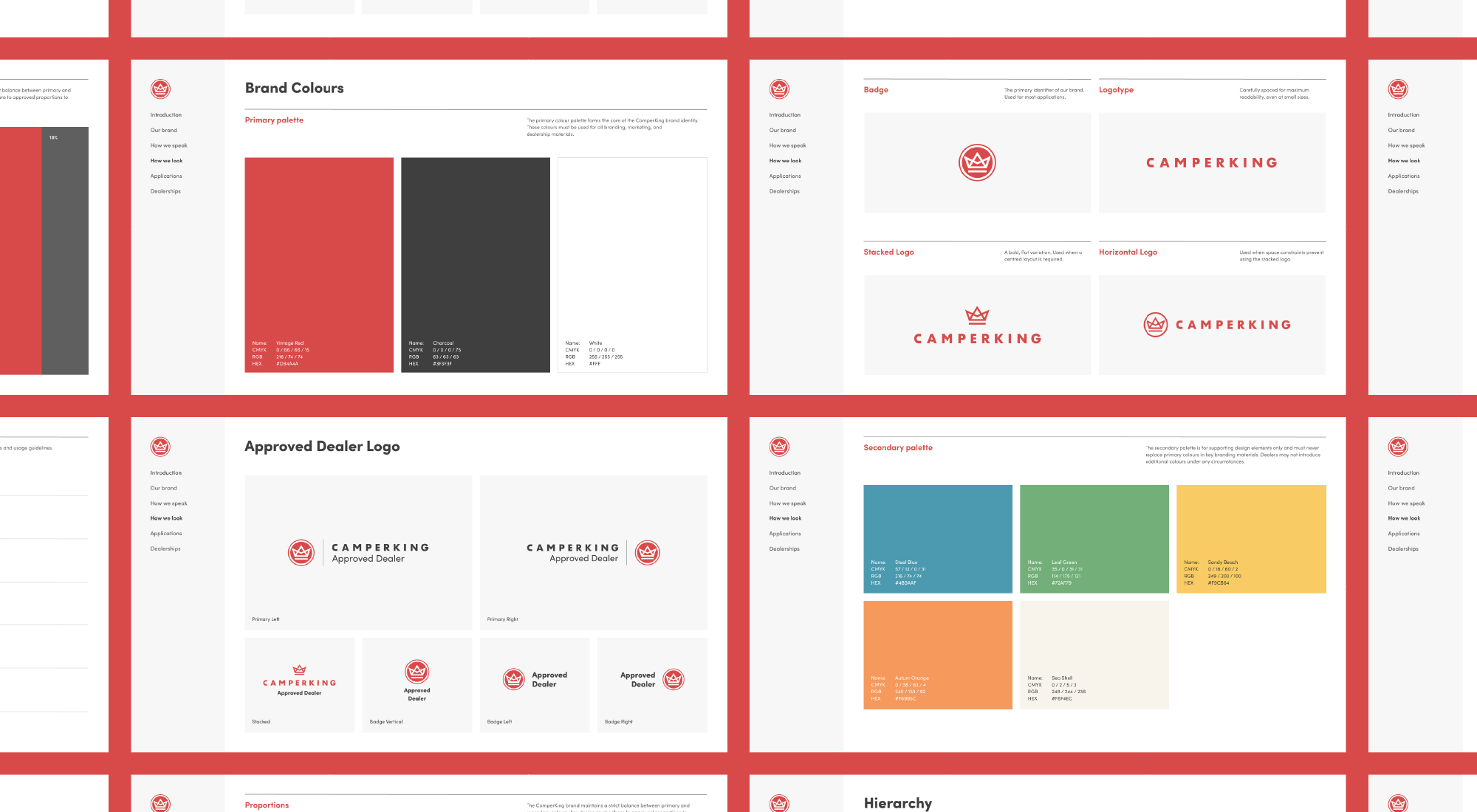 View our case study for CamperKing.