



Emotion drives decisions, and direct response copywriting is all about getting readers to decide to take the action you want them to take. One of the most effective emotions to utilise when it comes to direct response copywriting is fear.
Using fear in copywriting to persuade a reader to take the action you want is a delicate art. Go too far, and you risk entering off-putting clickbait territory. There’s also the question of ethics. It’s a thorny part of content strategy.
So, before you make use of the powerful emotion of fear in your copywriting, there are some crucial things you need to know.
Get in touch with our team now to discover how we can help you use emotion-driven copy to generate you more business.
What is fear-based marketing?
Fear-based marketing is a strategy that hones in on an apparent “threat”, as perceived by a target audience, and uses the fear that the threat causes to drive a response. That response can be buying a product or service, subscribing to a service, enquiring about a service or product, and more, depending on what’s being sold.
There are three broad categories of fear marketing:
- Creating a sense of exclusivity
- Making the consumer feel like they will miss out
- Making the consumer fear a future threat
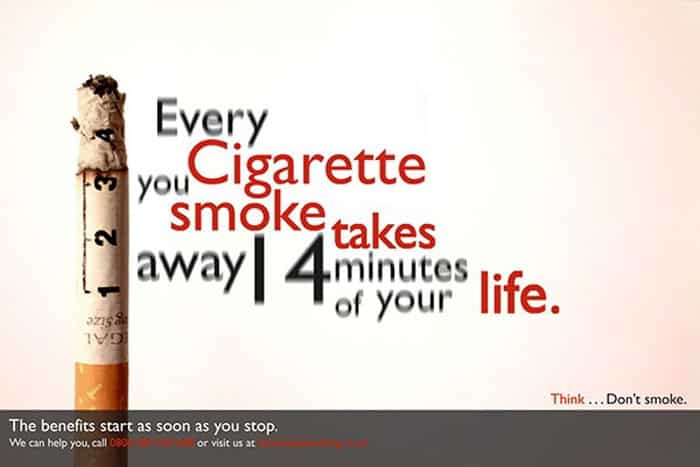
Fear is particularly effective when used to sell safety and security products, as well as in government schemes like anti-smoking advertisements or HMRC crack-downs:

What’s the science behind fear-based marketing?
Fear is an essential part of the human brain, protecting us from perceived threats by making us take action.
Research from the University of Chicago has shown that fear is a better motivator than emotions like hope.
Take, for example, someone who is about to do something dangerous, like walk into the path of an oncoming vehicle. You shout to warn them, causing them to feel fear and prompting them to take action to help themselves.
Fear prompts action.
As Kirsten A. Passyn and Mita Sujan explain in their research from the Journal of Consumer Research, “Making people feel good is less important than making people feel accountable when it comes to making wise decisions about self-protection.”
The FOMO factor
The concept of FOMO (Fear of Missing Out) is one you’re likely very familiar with. You don’t want to go to a social event, but you don’t want to miss out on a great experience that other people are sharing and you aren’t. So you go anyway.
Psychological research on the concept of FOMO defines it as including two processes: “Firstly, the perception of missing out, followed up with a compulsive behaviour to maintain these social connections.”
So, it makes sense that copywriting that works to create a perception of missing out will encourage action to remedy that.
Common FOMO copywriting examples include:
- “While stocks last”
- “Last chance to buy!”
- “Reserve your tickets now”
- “Members only”
- “Only available for registered users”
- “Unlock now”
- “Special offer for subscribers”
You might see this in paid ads or paid social media posts.
Is using fear in marketing ethical?
Using persuasion techniques is different to using manipulation techniques. Using fear in copywriting can be considered ethical if your product or service provides an actual solution to the problem which is causing the fear.
If your product or service can genuinely alleviate a pain point, and is actually in the customer’s best interest, then taking advantage of fear to persuade action is justifiable. For example, fear was used for good in this way in COVID-19 vaccination campaigns, using fear of the illness to encourage action to protect against it.
If you’re unsure, it’s best to get the professionals in. This is one thing you do not want to get wrong.
How to use fear ethically and effectively in copywriting to prompt action
So, you know that fear is an effective strategy for direct response marketing. But how do you actually use it in your copywriting?
An oft-cited study by Kim Witte identifies the key criteria for successful messaging using fear:
- Specify a threat that is moderate to high, not mild
- Ensure the reader feels they are personally at risk
- Ensure the reader believes that preventative action is simple and doable
With this in mind, below is how to effectively use fear in your copywriting:
01. Know your audience.
You have to know exactly who your target audience is and what makes them tick. You must know the fear that motivates them, or you won’t get through to them.
Knowing your audience means you pick the right threat, whether that’s FOMO or fear of a future threat, and hone in on it.
02. Identify the threat they face and demonstrate that you understand.
Don’t be vague: specificity is key. Explain, loud and clear, that you know what the threat the target audience fears is. You get it.
Using particular examples and illustrations that are easily recognisable will build the reader’s trust in you. It feels personal. It will make them feel understood and, therefore, more engaged in your message.
03. Make the threat easily conquerable with your product or service.
You’ve identified the threat and you’ve made it personal to the reader. Now, you make the threat easily beatable with your help.
The value of your product or service must be obvious and it must be in opposition to whatever has caused the threat you identified in the first place.
Let’s use an example with the SEO services of a digital marketing agency (say, Bamboo Nine, whoever they are) aimed at senior decision-makers in businesses.
Here, the fear usually isn’t a lack of knowledge, but underperformance.
Direct response copy using fear for this audience might look more like this:
You’re investing in your website. You’re publishing content. SEO is technically “covered” in your marketing department.
But competitors continue to outrank you for commercially valuable search terms. Organic traffic isn’t converting into qualified enquiries and your budget is increasing, but the return is harder to explain internally.
You’re not growing organically at the rate you should be. And every quarter that passes strengthens someone else’s visibility in your market.
You need a clearer, smarter SEO strategy before underperformance becomes entrenched.
Bamboo Nine approaches SEO strategically. We identify where visibility is being lost, which search demand genuinely drives revenue, and what is limiting performance across your site and content. Then we prioritise the actions that deliver measurable commercial impact, not just vanity metrics.
If organic search is meant to be a growth channel, it needs to perform like one.
Here the threat becomes manageable because it’s properly defined. And once it’s defined, it can be solved.
Persuaded by that example? Have a look at our SEO services to see how we really put our money where our mouth is.
Examples of ads that use fear effectively.
Here are some examples of ads that have successfully drawn on fear in their copy to garner a response.
All images are sourced from Marketing Examples.
DuckDuckGo
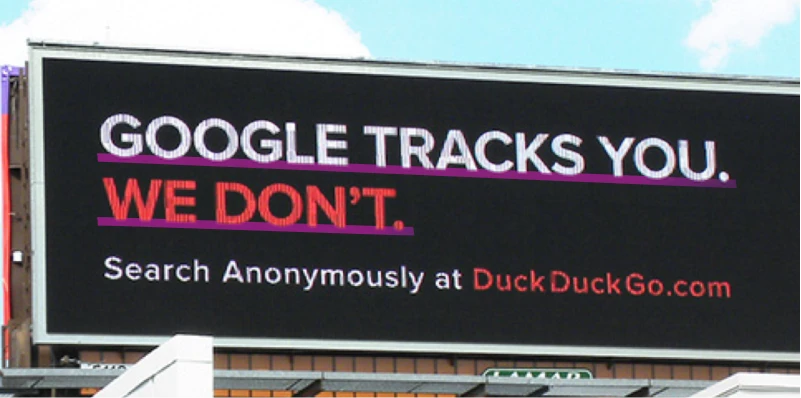
This billboard successfully uses fear, immediately identifying a threat and making it personal with the use of “YOU”. It then provides a solution to the threat, all within three, punchy sentences.
Bell Helmets
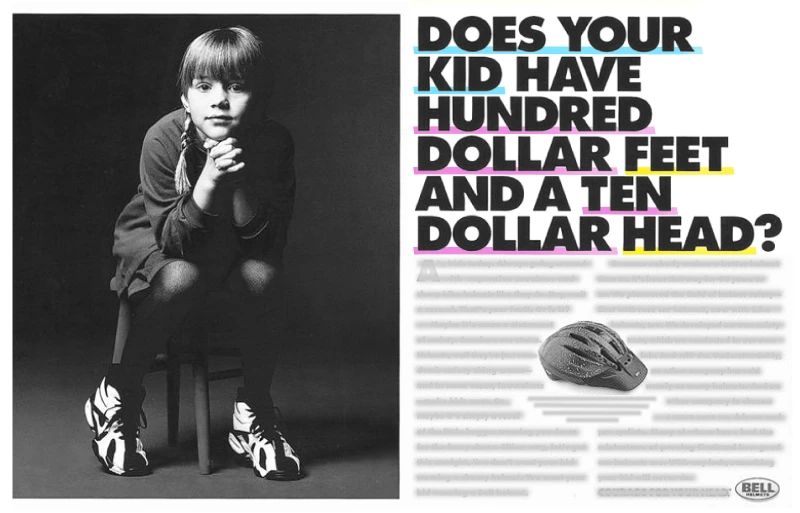
In this classic ad from Bell Helmets, the copy suggest a potential future threat. The personal pronouns make it more powerful and give a sense of urgency.
Accounting Ad
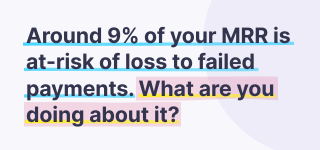
The copy from this accounting services company uses a statistic to make the threat ultra-specific and tangible. It then asks a question which prompts action. What are you going to do about it? You’re going to read on and find out how this company can help you.
SparkLoop
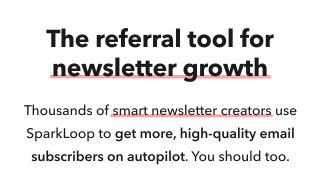
SmartLoop cleverly creates FOMO here by implying that everyone who doesn’t use their services is not smart. It makes the reader want to take action to be included in the list of intelligent creators.
Hair Loss Ad
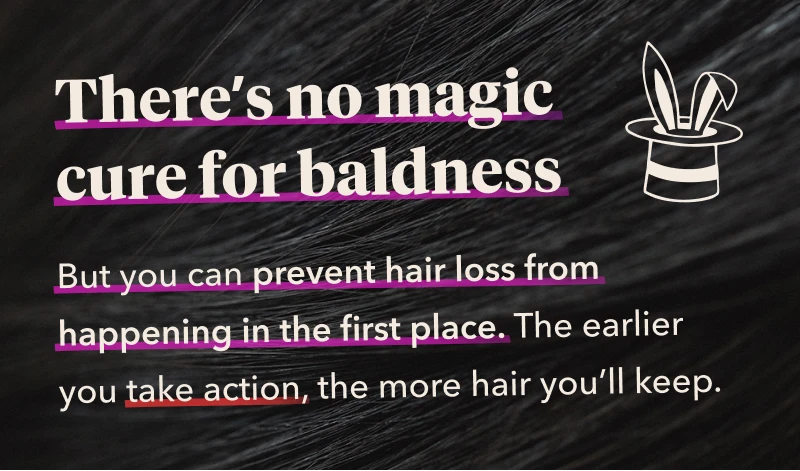
The fear in this ad comes from the sense of urgency created by the copy. It implies that if you don’t use the solution this company provides, it might be too late for you.
In all of these examples, the key facets of using fear are adhered to:
- They are all specific: they hone in on one, clear threat
- They are all personal: they centre the reader, making the threat seem real and relatable to them
They provide an actionable solution to the identified threat that centres their product or service
What’s the best way to use fear in marketing?
Using fear in your copy has proven results in a marketing strategy if you stick to the steps above. It is absolutely crucial that you’re never exploitative, and actually have a genuine solution to a problem.
If you’re unsure where the line sits between persuasive and manipulative, start with clarity.
Our Discovery Consultation process helps you define the real problem your product solves, identify the pressure points that genuinely motivate action, and shape messaging you can stand behind commercially and ethically.
Get in touch if you want to discuss how we can use FOMO marketing for your business, or learn more about content marketing strategy and its vital role in organic growth.